
📚 Books I Read in July and August 2026
Back from a long break with a long list of summer reads. Two highlights, one of which comes with some caveats. Also, a great biography, more vibe writing and a bunch of sci-fi reading because why not?
For those who might be wondering, yes, I'm still alive. I've taken a bit of a long break during the summer, combined with an unusually busy late-summer period. All this to say that I've been too busy to write anything during August.
But here I am, back with the July/August edition of the books I read last month!
This is a long list, so please bear with me.
As a reminder, all links in this issue will point to the books' pages on HardCover via a referral link.
If you want to quickly access all the book reviews I've been publishing since March 2024, here's a convenient link you might want to... bookmark (pun intended).
Sudo Make Me a CTO is a reader-supported newsletter. If you enjoy the content and would like to see more of it in the future, please consider upgrading to a paid tier. Thanks in advance!
💫 July Book Highlight: The Reverse Centaur's Guide to Life After AI by Cory Doctorow
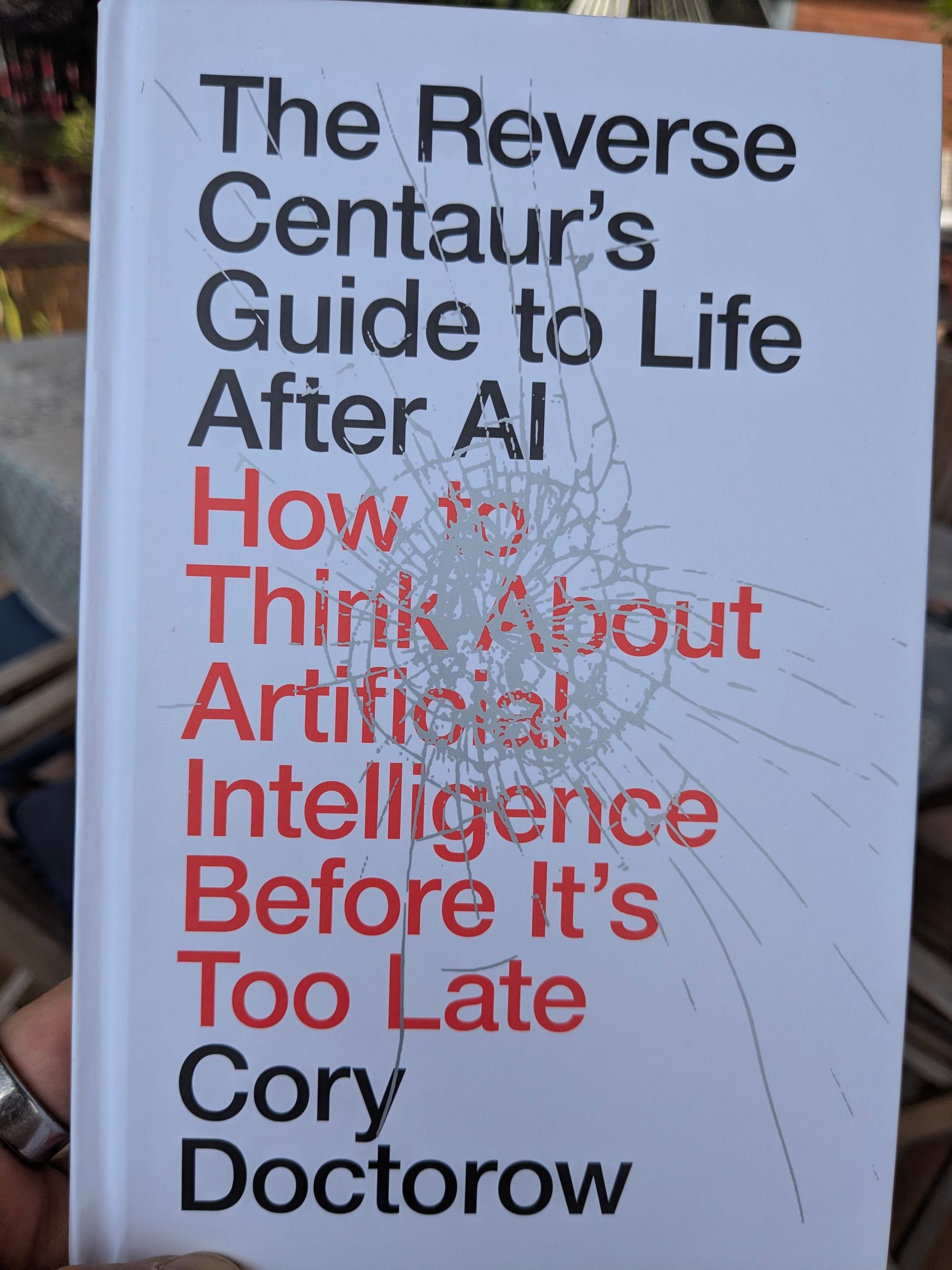
The Reverse Centaur's Guide to Life After AI, by Cory Doctorow
225 pages, First Published: June 23rd, 2026
I preordered this book as soon as it was announced and was lucky enough to receive a signed copy. That was a nice surprise.
Doctorow introduced the concept of Reverse Centaur in his best-selling book Enshisttification, which I covered in a previous post
 Sergio Visinoni
While a centaur is someone that is augmented by technology in achieving their goals, the reverse centaur is a person who has become enslaved by the technology, whose whole existence is to make the machine perform better, faster or more productively.
I remember thinking about AI immediately when I read about it in Enshittification and was not surprised yet excited when The Reverse Centaur's Guide to Life After AI was announced.
This is a relatively short book that follows up on many of the concepts and topics introduced in the prior book, with a specific focus on AI. In pure Doctorowian style, it's filled with interesting facts and very opinionated takes on the tech industry writ large, served with a good dose of humour and witticism.
The main theory in it is relatively simple: the AI rush we're all witnessing is indeniably a bubble, fuelled by big tech who is desperate to find a new growth story and, in so doing, convince the stock market they should be traded at growth-level multiples, rather than mature-level multiples. As such, he argues that the main target for the AI hype aren't users but investors.
Tech companies are spending hundreds of billions of dollars on I and cramming it into your every orifice with every hour tht God sends in a desperate gambit to convince investors that they will conquer the AI market an, in so doing, continue to grow.
While not mentioned in the book, the recent SpaceX IPO is perhaps a great example of this phenomenon.
And he goes on to explain what the obvious promise of AI to the industry is: getting rid of wages, or the salary tax, as a prominent CEO infamously said. In one example, he looks at the frequently mentioned AI-assisted radiology topic and concludes:
This is classic reverse-centaur stuff. The AI's primary job is to decrease the wage bill associated with radiography; it is only secondarily charged with spotting tumors on X-rays. Installing a radiologist between the AI and the patient allows the hospital to do the former without taking responsibility for failures in the latter. That's the radiologist's job. They are–in the memorable phrasing of the investment bank analyst and writer Dan Davies–an "accountability sync".
As Doctorow explained very accurately in a recent essay, AI and a world without migrants, dealing with other people is messy and cumbersome, and some people would happily get rid of the nuisance:
There has always been a group of people who refused to acknowledge that other people have perfectly valid reasons for wanting to pursue their own goals rather than yours. We call most of those people “toddlers” and devote sizable social effort to helping them outgrow this belief.
But there’s another group of people who carry this belief into adulthood. If they’re of regular means, we call those people “bullies.” However, if they’re sufficiently wealthy, we call them “billionaires” (this is the same force that allows money to transmute a “hoarder” into a “collector”).
Or, as he puts it more succinctly in the book
Scratch any AI-driven unemployment story and you'll find a boss whose biggest workday headache is a worker with human needs.
There is also an interesting coverage of the copyright issue, which Doctorow dismisses as a non-issue. Or rather, that focusing on addressing the copyright violation at the core of generative AI won't address the fundamental problem, as it will only benefit rich and exploitative media companies, not artists and authors.
In a world of giant medi cartels, giving creative workers new copyrights to bargain with is like giving your bullied schoolkid extra lunch money. It does not matter how much lunch money you give Junior, the bullies are just gonna take that, too.
I really liked this book until I got into two points made in the "After the bubble" section, which I can hardly agree with. In this part Doctorow explores what will be the useful leftovers once the bubble bursts. And for some inexplicable reason, he ventures into suggesting that AI chatbots could be helpful as personal therapists?!
A chatbot "therapist" is more like and interactive journal, one that feeds you back bland–but increasingly personalised–response as you spill your guts to it.
[...]
An AI therapist is a chatbot that you iteratively prompt and re-prompt, and the sentences in its replies to you are a higher-and higher-fidelity expression of the coomunicative intent you infuse into the sentences you feed it.
What the flying fuck, Cory? Did someone suddenly steal your keyboard and surreptitiously add this paragraph? After all you've written in the preceding pages, how can you ignore plenty of literature on the harms and danger of using AI chatbots as therapists?
What's even more upsetting is that he mentions ELIZA as one example where people reported that "conversing" with ELIZA was often revelatory (without quoting sources), while its creator, Dr Weizenbaum, was horrified at how people tended to be delusional in their interactions with the chatbot, ending up declaring that AI was an "index of the insanity of our world."
What's fundamentally upsetting is that the way Doctorow's suggestion and most of the following pages are the results of mostly unsubstantiated speculation, in stark contrast with the detailed diagnosis and dissection of the AI bubble that precedes it. The whole chapter, AI After the Bubble, is essentially that. And it's all more infuriating as it closes on a final criticism of the people who were inspired by science fiction to create the current iteration of the technology.
Reading science fiction to find out what inventiorns we can expect in the future is absurd. It elevates people like me to the status of prophet. Trust me, we do not know what the future holds any more than you do.
I agree with that, so why spoil what was a great book with a purely speculative chapter? That really puzzles me.
Despite that, this is still a book well-worth reading. And if you have any takes on the controversial points I mentioned above, I'd be more than happy to discuss them!
💫 August Book Highlight: Careless People by Sarah Wynn-Williams
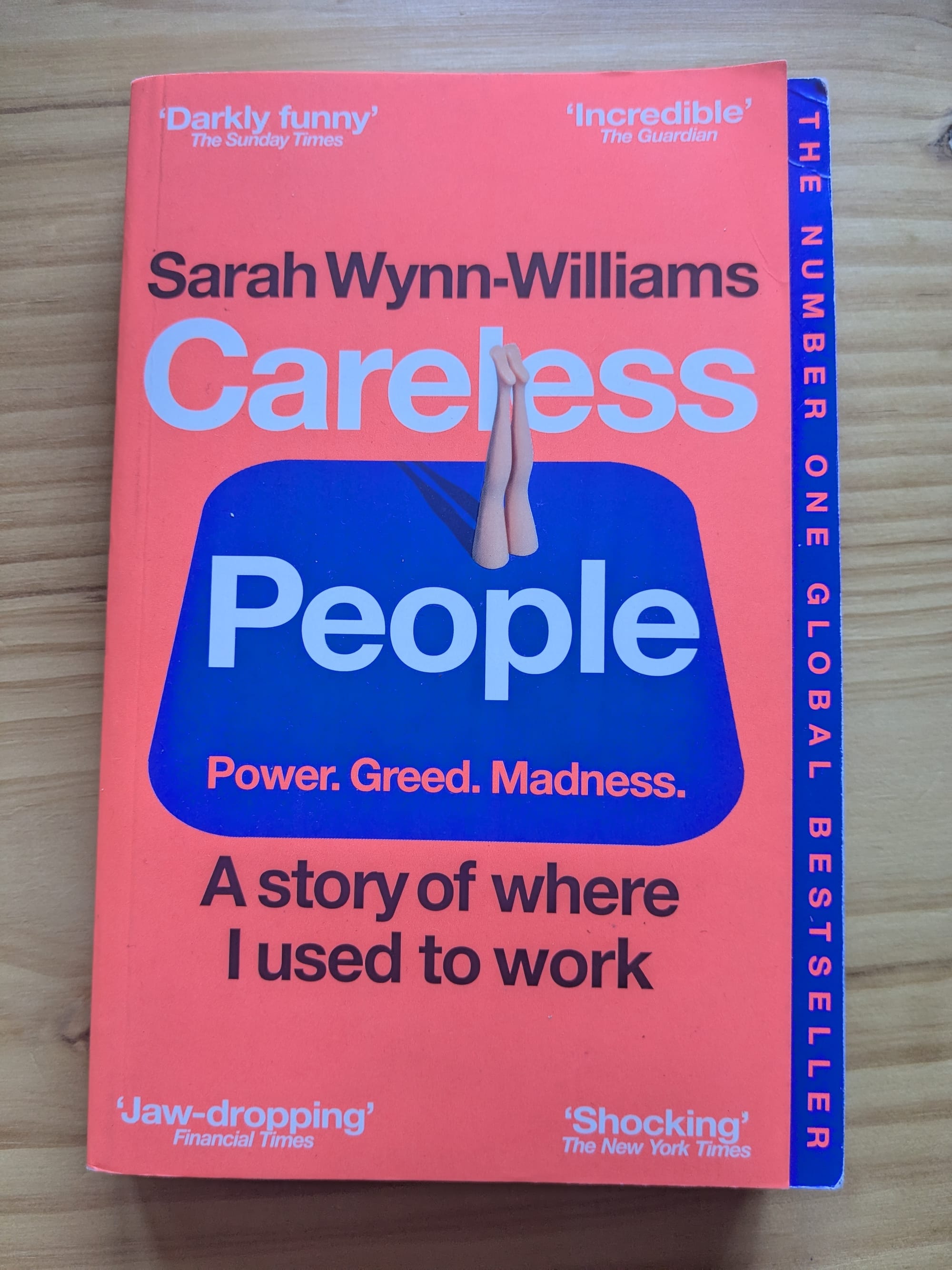
Careless People, by Sarah Wynn-Williams
383 pages, First Published: March 11, 2025
I've always known that Meta was not the kind of company I would work for, even if desperate. But it wasn't until I read Sarah Wynn-Williams' book that I realised how irremediably rotten to the bone the company is.
Sarah used to work for the policy team and believed that Facebook could be a true force for good. That conviction inevitably faded away as she spent year after year dealing with the moral corruption, carlessness and greed of the company leadership. Careless People, besides being a very accurate choice of words, is the story of how she went from idealistic to deluded.
The book doesn't spare anyone, and it's full of details that I found repulsive on multiple occasions. And left me wondering about the common causality dilemma: are folks at Meta becoming corrupted because of them being exposed to the system that runs the company, or are they attracted to it because they're already corrupt, greedy and morally bankrupt?
I don't have a definite answer, and Sarah's book seems to suggest it's a mix of both, with senior leadership most likely following in the latter category. She seems to be an exception to both cases, as, according to her own recollection, she regularly tried to push back on the most obscene proposals and initiatives until she had to give up and leave the company.
I don't know the extent to which what she says in the book is accurate. As it often goes, human memory can be very selective and imprecise. That said, even if something like 25% of what she says in the book is a truthful reconstruction of the events, that would be enough to paint a very stark picture of Mark Zuckerberg, Sheryl Sandberg and their closest partners in abjectedness.
There were many moments in the book when I thought, 'Wow, this is even worse than I thought,' as Sarah told the story of how senior leadership was often not only aware but also directly pushing some of the most questionable decisions in the company. Just to give you a sample, here are a couple of them.
The first one is about Joel, the new leader in charge of the policy team, whose views seem driven more by business than any mature political thinking
Joel is surprised to learn Taiwan is an island. Often when we start to talk about pressing issues in some country in Latin America or Asia, he stops and asks me to explain where the country is. This happens so frequently that a few weeks into his tenure, I offer to buy him a world map. He turns that down, but days later, large framed map shows up in his office.
Just a few weeks after he takes over Marnet's job, Joel starts hiring a political sales team to push politicians–here and abroad–into becoming advertisers. The idea is, if politicians depend on Facebook to win elections, they'll be less likely to do anything that'll harm Facebook. If Facebook is the goose that lays the golden egg, no one wants to kill the goose. Get them hooked onto those golden eggs. Also, unlike Marne, Joel wants the policy team to generate revenue. The way he sees it, Facebook is a business and the policy team should be contributing to the bottom line. He doesn't want to be viewed as a "cost centre" internally. Politicians advertising is a way to change that. And elections are the biggest opportunity. Fresh-faced Harvard grads start moving into the Washington, DC, office to sell ads to politicians and political campaigns.
While this might not be entirely shocking for you, it certainly was to the author, as she had an extensive career working at the United Nations prior to joining Facebook.
But the most disgusting example is one relating to the now well-known abuse of teenagers' insecurity to drive ad revenues.
The privacy staffer explains that teams do this type of customized work targeting insecurities forother advertisers, and there are presentations for other clients specifically targeting teens. We discuss the possibility that this news might lead to investigations by the state attorneys general or the FTC, because it might become public that Facebook commercializes and exploits Facebook's young users.
To me, this type of surveillance and monetization of young teens' sense of worthlessness feels like a concrete step towards the dystopian future Facebook's critics had long warned of.
A statement is quickly drafted and the response team debates whether Facebook can include the line, "We take this very seriously and are taking every effort to remedy the situation," since in fact this is apparently just normal business practice. A comms staffer points out what should be obvious: that "we can't say we're taking efforts to remedy if we're not."
This prompts other team members to confirm his take, revealing other examples they know of. Facebook targets young mothers, based on their emotional state, and targets racial and ething groups–for example, "Hispanic and African American Feeling Fantastic Over-index." Facebook does work for a beauty product company tracking when thirteen-to-sententeen year old girls delete selfies, so it can serve a beauty ad to them at that moment.
You get the point, and the book is so full of such examples that you might want to take it in small doses if you're particularly sensible.
If you wanted one extra reason to buy and read this book, here it is: since its publishing, Sarah Wynn-Williams has been in a legal battle with Meta. Meta reacted to the publication of the book with all its lawyers and money. She's officially restrained from talking negatively about the company in public or even just talking about it. This attempt at blocking her has somewhat backfired, as it fuelled the sales of the book worldwide and even led to a surrealistic event where Sarah Wyn-Williams participated in a panel on big tech by sitting there completely silent during the whole event.
They tried to silence her; we should give her back her voice by promoting this great book.
📚 Other Books I Read in July
Alan Turing: The Enigma by Andrew Hodges
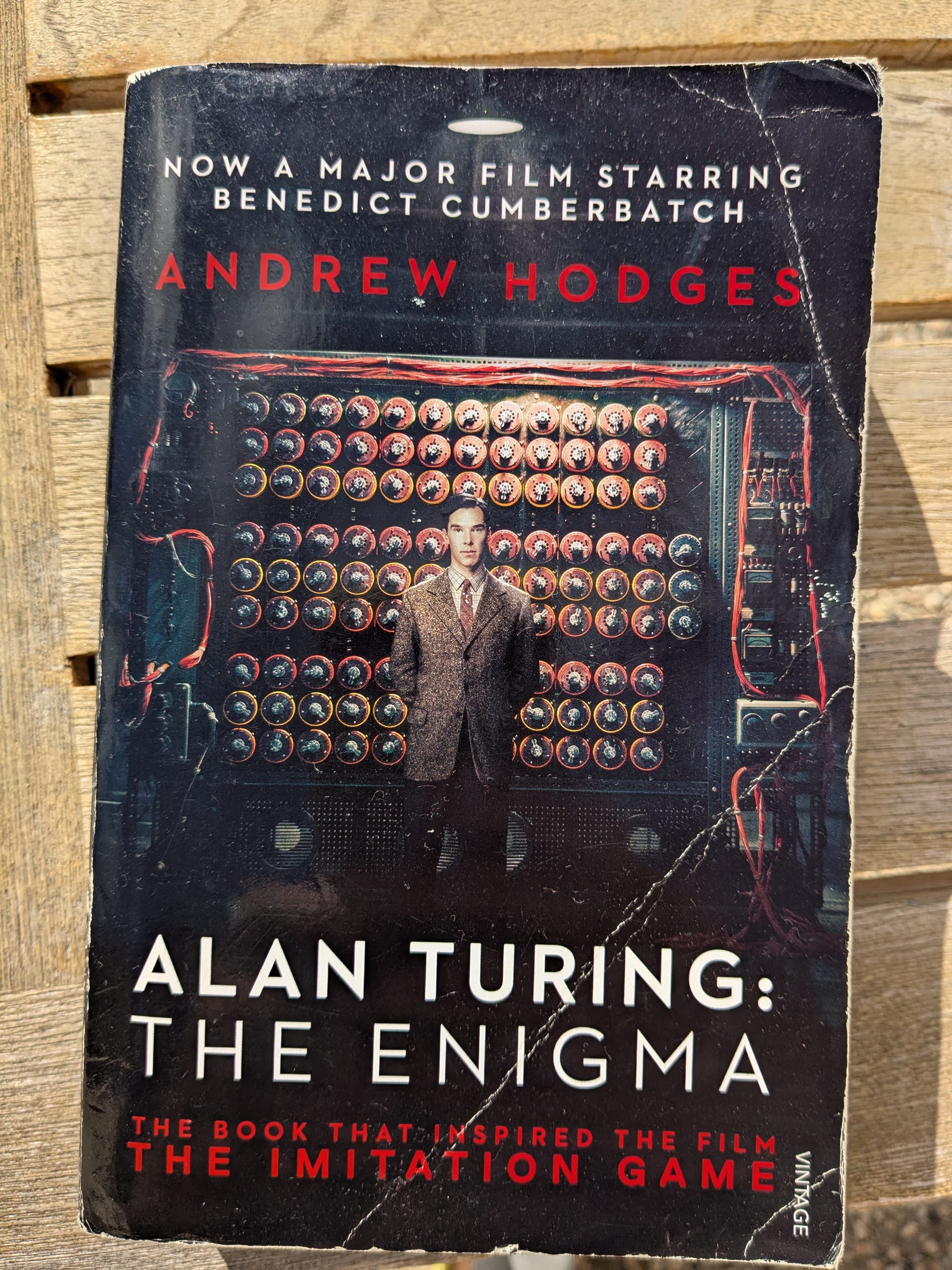
Alan Turing: The Enigma, by Andrew Hodges
768 pages, First Published: November 1st, 1983
It took me A LOT to read this book. It's long, dense, and filled with detailed information. But it was definitely worth it.
Do not be put off by the fact that it has inspired the movie The Imitation Game, especially if you've seen it. That's a good movie, but it only scratches the surface of understanding the unique personality, brain and life of Alan Turing.
Andrew Hodges does a great job at painting a well-rounded picture of one of the most influential minds of the 20th century, despite his relatively short life. I did know quite a bit of detail about Turing before picking up the book, especially regarding his work at Bletchley Park during WWII breaking the enigma encryption system, but what I know was a fraction of Turing's life and achievements.
He was a true free thinker, interested in challenging problems that spanned across multiple disciplines. He was well versed in maths, physics, chemistry and engineering. He eluded the image of the ivory-tower notion of the academic of his time and often got his hands dirty in hands-on engineering feats. He never sought political power or prestige and only focused on doing actual impactful work. He lived his sexual orientation with a degree of openness and carelessness that was unusual for the period.
For some Cambridge students a sight of the new Germany, and a brush with its crudities, might engender a powerful anti-fascist commitment. This step was not for Alan Turing. He was always friendly to the anti-fascist cause, bot nothing would make him a 'political' person. His was the other road to freedom, that of dedication to his craft. Let others do what they could; he would achieve something right, something true. He would continue the civilisation that the anti-fascists defended.
While reading the book and learning more about Turning, I often wondered how he'd fit in and what he'd think about the current technology landscape. While one of the pioneers in AI and machine-simulated intelligence, he always distanced himself from grifters. In a passage of the book, Hodges tells of his relationship with the cybernetics current.
This in Cybernetcs it was seriously suggested that McCulloch and Pitts had solved the problem of how the brain performed visual pattern recognition. The cybernetics movement was rather liable to such over-optimistic stabs in the dark. One story going around, which later turned out to be a hoax, but which found its way into serious literature, was of an experiment supposed to measure the memory capacity of the brain by hypnotising bricklayers and asking them such questions as 'What shape was the crack in the fifteenth brick on the fourth row above the damp course in such and such a house?'. Alan's reaction to these cybernetic tales was one of amusement.
I'd be willing to pay what he'd think about the current discourse around AGI.
Anyways, a recommended book if you're into biographies and would like to know more about this complex and influential figure.
Beyond Vibe Coding by Addy Osmany
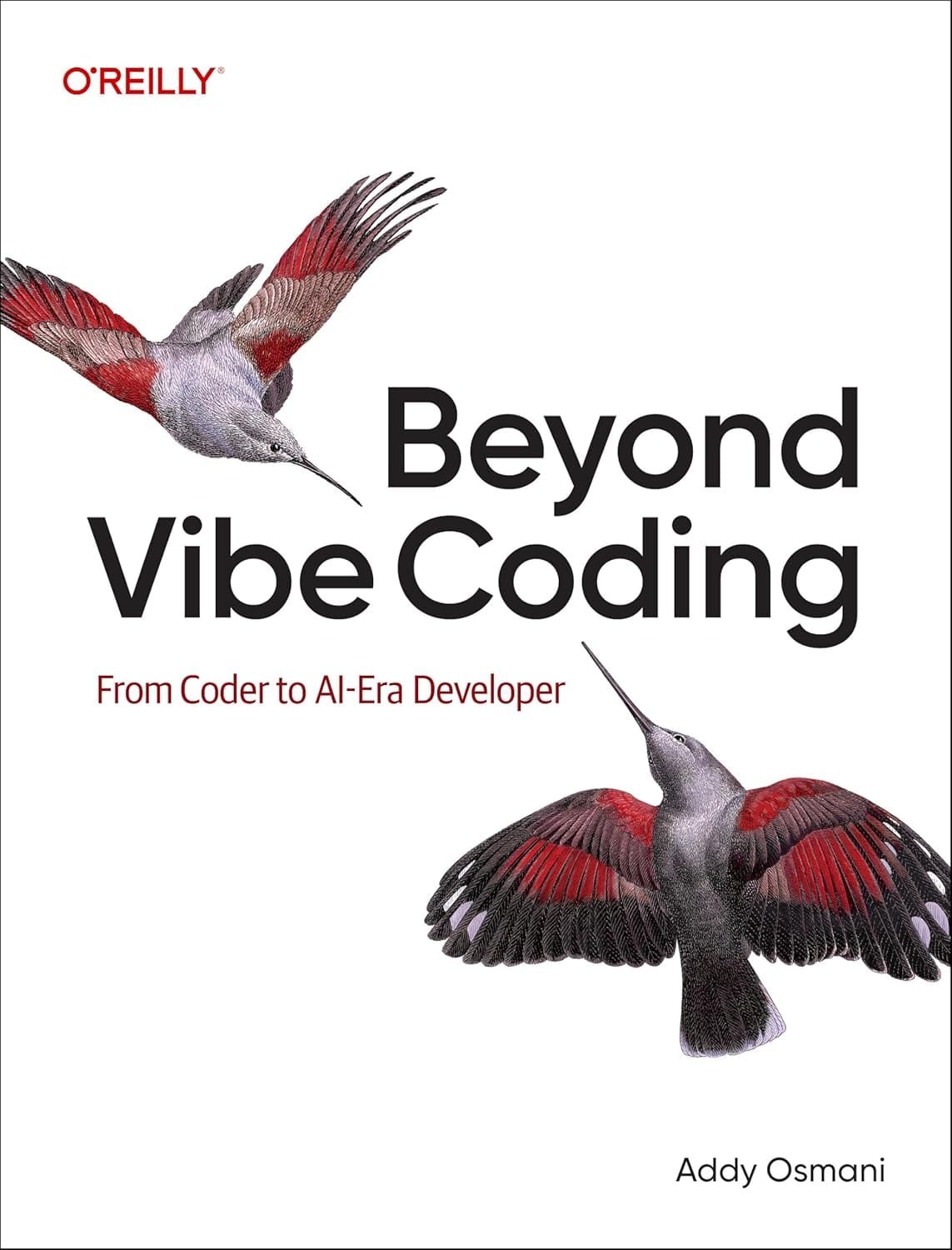
Beyond Vibe Coding, by Addy Osmani
252 pages, First Published: September 23rd, 2025
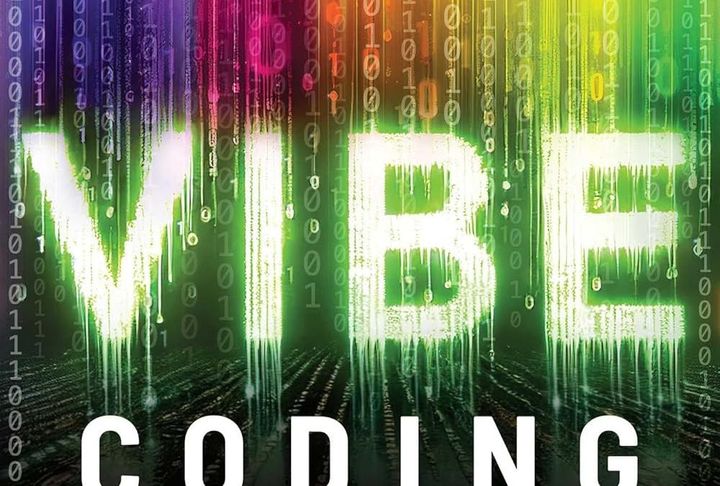
After the awful experience reading Vibe Coding by Gene Kim and Steve Yegge, I thought I should not be totally discouraged. I decided to treat that first book as an exception and picked up Addy Osmani's book with a very similar title.
 Sergio Visinoni
Like Kim and Yegge, Osmani has been riding the hype of AI-assisted coding and vibe coding from the early days. He's written numerous blog posts on the subject, and this book is essentially a collection of such posts brushed up to make them sound like a coherent book. I'm serious. In some places he even forgot to change sentences such as "In this article", etc.
It's important to note that Osmani works at Google, a company with a lot of vested interest in the AI-assisted coding market. Unfortunately Osmani doesn't disclose that in the book, but he plants some pretty obvious clues through the book. The most telling one is that he's often mentioning Gemini in his example. I know of only two categories of people using Gemini for coding: Google employees and folks who can't afford a subscription and use what their company is already paying for via Google Workspace. I don't believe Osmani belongs to the latter category.
But back to the blook. To its merits, it definitely is beyond Vibe Coding (Kim and Yagge's book), in the sense that it's not as blatantly vibe-written, repetitive and dramatically unsound. But it doesn't really go beyond vibe coding (the practice), as it's mostly talking about it. Furthermore, given that the content has been written through 2025, and given that the average shelf life of any trend in this space is counted in weeks, it's full of outdated suggestions. Or at least, that's what the current mojo would tell.
There are two main things that are still very relevant and deserve a few comments.
The first one is that Osmani recognises that LLMs sometimes regurgitate verbatim copies of part of their training dataset. A problem that AI companies have been downplaying since the early days, but none has really solved. It's commendable that he acknowledges and warns the reader against this very concrete problem, but the way that he frames the responsibility around it is completely backwards.
If an AI output seems like a verbatim or near-verbatim copy of known code (especially if it includes distinctive comments or author names), treat it carefully. Consider running a similarity check with a plagiarism detector tool, or do a web search for unique strings to see if you find any matches that could indicate copying.
While I do agree that the coder should know what is going on, I completely disagree with Osmani's framing, for two reasons.
First of all, if a coder should run online searches for every piece of code generated through an AI, that would represent such a significant amount of work that it will quickly defeat the purpose of gaining in efficiency, i.e., the unique selling point of AI generation. But I don't care too much about this aspect, as it only shows once more how often unsubstantiated productivity claims are. The real problem is another. AI companies should be held accountable for whatever their models generate. If they commit plagiarism, they should be the ones taking responsibility for it, rather than waving this off with ridiculous disclaimers. Luckily a German court has recently stated something similar, holding Google accountable for the content of their AI-generated summaries.
But we need the entire industry to wake up to this, stop putting the burden on the user and start calling bullshit on the companies that keep selling the promise of a fully automated future. If an aircraft explodes mid-air due to a faulty component, it's the manufacturer to be blamed and be held responsible, not the pilot!
The second aspect of the book worth some critique is the sense of inevitability combined with the illusion of influence if you just get along for the ride.
The exponential change we're seeing is a rare opportunity. Think of previous technological leaps, from the Industrial Revolution to the internet boom–those who engaged with them shaped entire industries. We are at such a juncture with AI in software development. It's not just about keeping your job or making it easier; it's about having a say in how technologuy evolves and how it impacts society.
I guess Osmani might believe that he has a saying on how many folks will be laid off due to some draconian company leader aiming to replace them with AI? Or how to stop the insane data centre buildup with all the harms it's causing? Or how to prevent the AI-bubble-caused financial crisis from wiping the savings and investments of large slabs of the population?
Such statements are so naive and misleading that I dedicated an entire article to them a few weeks back. I won't repeat the arguments. You can read them up here.
 Sergio Visinoni
I guess this is an area where the conflict of interest with the employer didn't help.
Ultimately, while I didn't find the reading experience as painful as with Vibe Coding, this book doesn't qualify for a recommendation, even if you access a "free" copy via the O'Reilly media online catalogue or some other form of fair use copyright violation.
📚 Other Books I Read in August
Homeland by Cory Doctorow
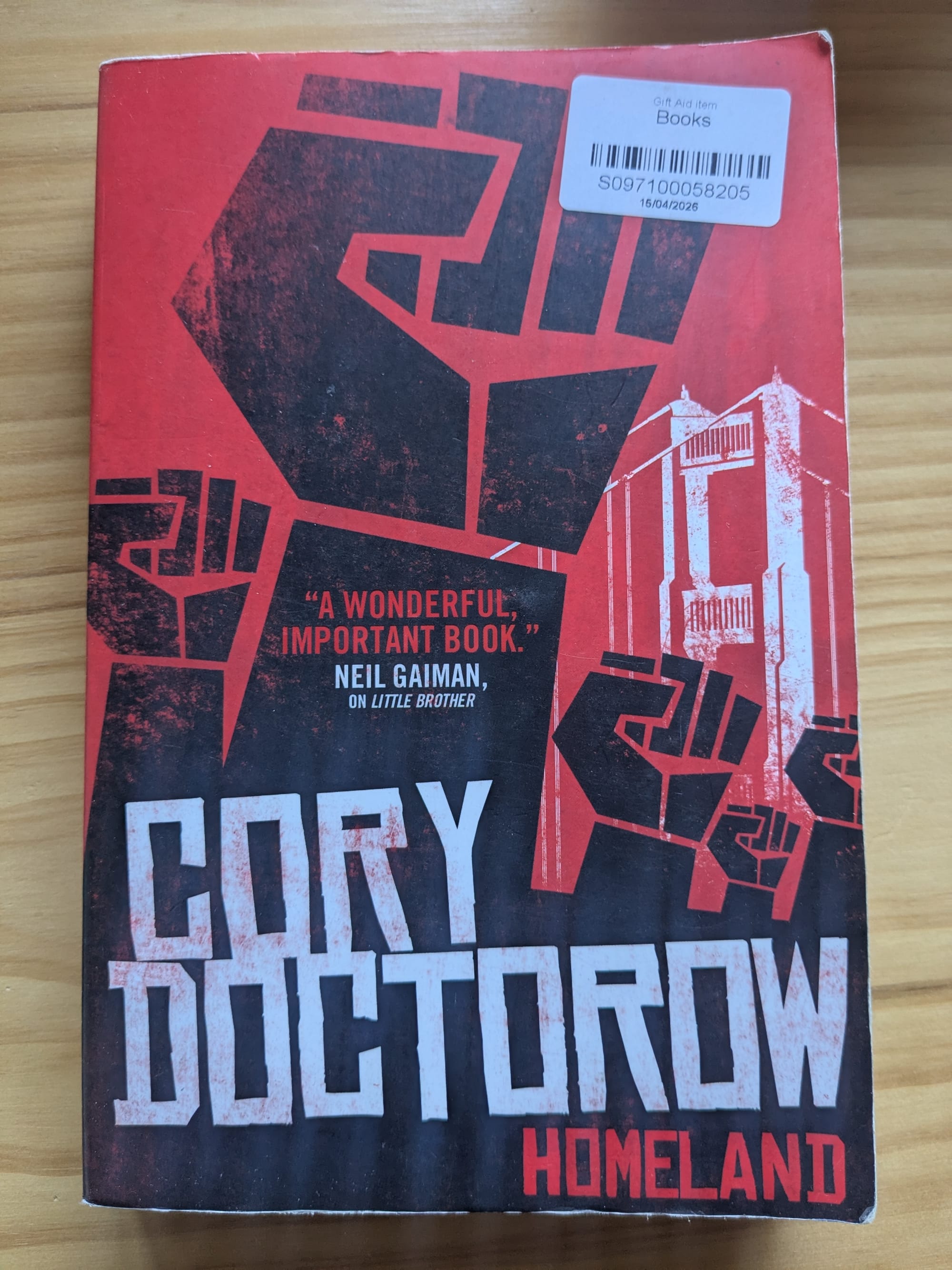
Homeland, by Cory Doctorow
415 pages, First Published: February 5, 2013
I discovered the Little Brother series and Doctorow's fiction writing back in June.
 Sergio Visinoni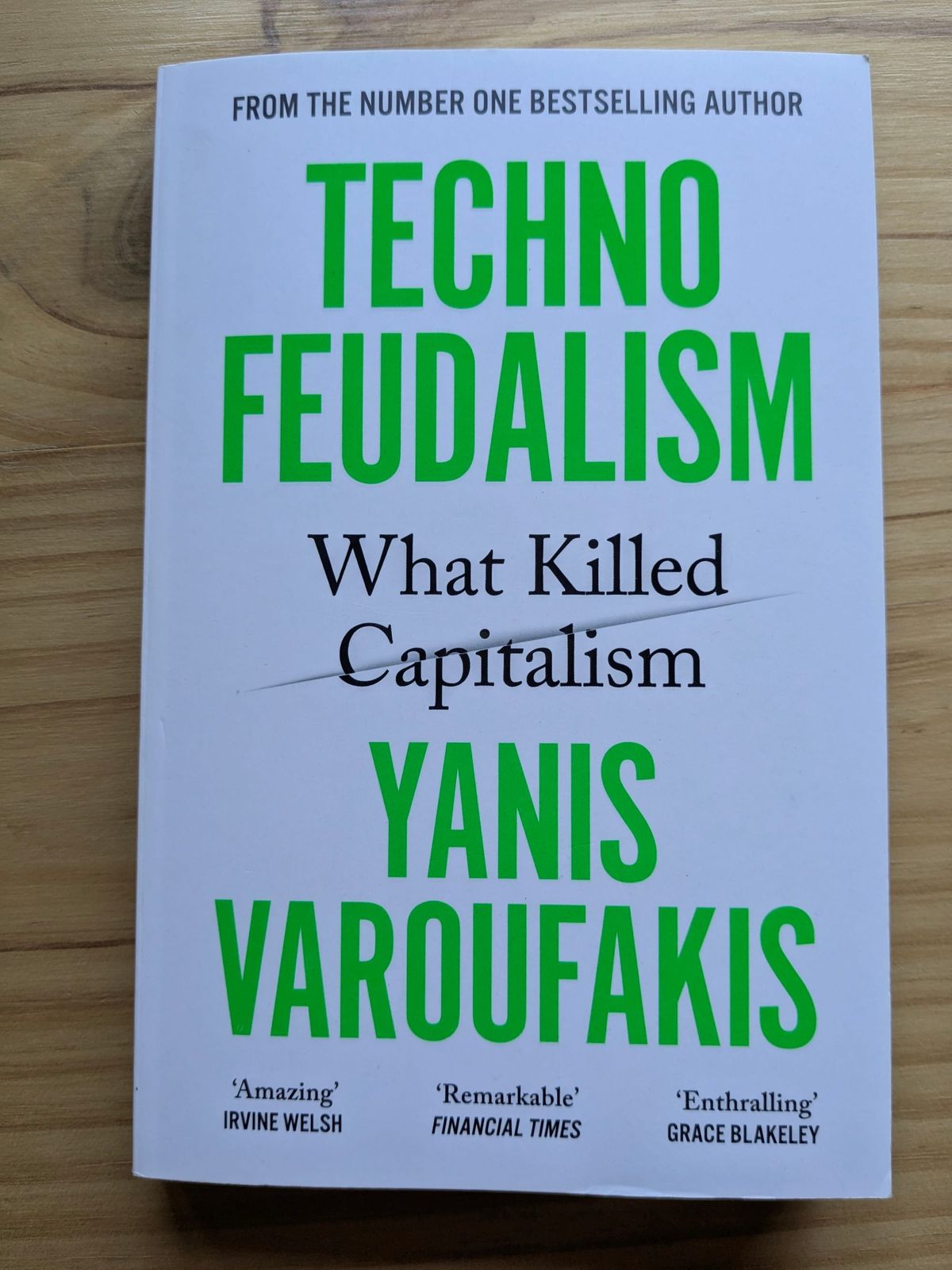
Homeland is the second book in the trilogy and follows the adventures of Marcus Yallow and his girlfriend Ange in the San Francisco of the 2010s. And again they're up against a repressive state and paramilitary forces cracking down on the civil society. It's again a good mix of adventure, technology and nerd references all over. A significant part of the plot takes place during and around the Burning Man festival, which makes it a bit too tech-bro-hypster for my liking.
I did enjoy the read, but I found it less impactful than the first book in the series. I'll surely find the third and read it, as I'm curious to see how the arc of the history will conclude.
Not a masterpiece, but a good summer read.
The Martian Chronicles by Ray Bradbury
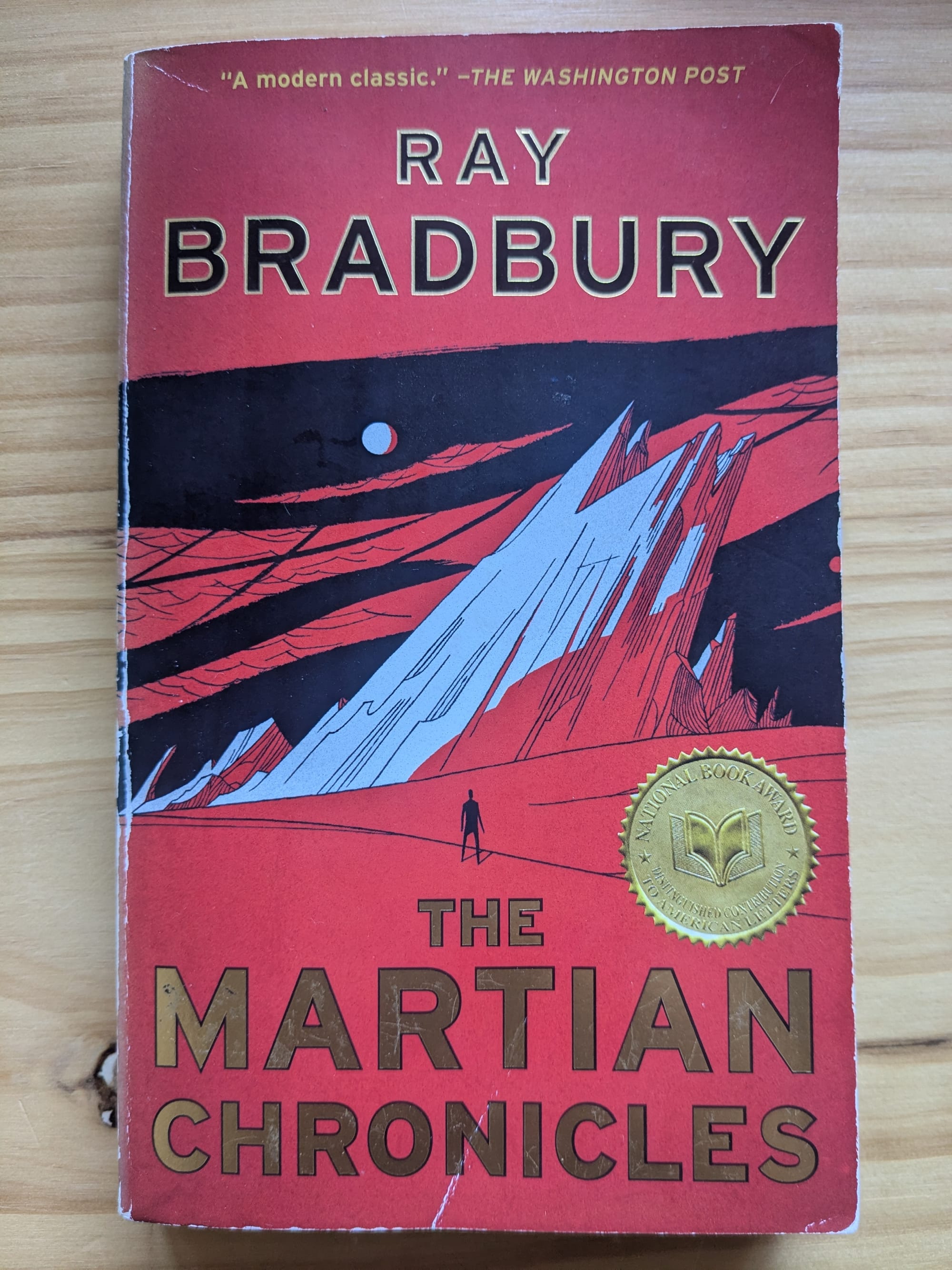
The Martian Chronicles, by Ray Bradbury
241 pages, First Published: May 4, 1950
I bought this book more than a decade ago in a bookshop in Mexico City. For some reason it had been hiding in my bookshelf, with the pages turning slightly yellow, until I decided to pack it with the rest of the summer travel books.
I had only ever read Farhenheit 451 by Bradbury, as I guess most of the sci-fi fans. Despite it being written in 1950, I found The Martian Chronicles surprisingly modern and relevant some 76 years later. In fact, unbeknownst to me when I decided to finally read it, the book covers a relatively long time span, with the latest chapter taking place in an imaginary October 2026 and the second to last in August 2026, the month when I actually read it.
Without reading too much into the coincidence, it's a nice little detail that made the reading slightly more enjoyable.
The essence of the book is simple: it narrates repeated human attempts at colonising Mars, with a lot of failures and some successes. Over the sci-fi backdrop, Bradbury paints a stark picture of brutal colonial and imperial aims driving human actions, warning about the consequences that the society at large seems intended to ignore.
One passage in particular couldn't be more explicit
"What could I do? Argue with you? It's simply me against the whole crooked grinding greedy setup on Earth. They'll be flopping their filthy atom bombs up here, fighting for bases to have wars. Isn't it enough they're ruined one planet, without ruining another; do they have to foul someone else's manager? The simple-minded windbags. When I got up here I felt I was not only free iof their so-called culture, I felt I was free of their ethics and their customs. I'm out of their frame of reference, I thought. All I have to do is kill you all off and live my own life."
This dialogue could be in a book written this year, maybe replacing atom bombs with environmentally devastating industry and technology, but the rest is as relevant today, if not more, than it was in the 1950s, when climate change was not even a thing.
Another monologue in the final chapter sounded eerily familiar
"[...] Life on Earth never settled down to doing anything very good. Science ran too far ahead of us too quickly, and the people got lost in a mechanical wilderness, like children making over pretty things, gadgets, helicopters, rockets; emphasizing the wrong items, emphasizing machines instead of how to run the machines. Wars got bigger and bigger and finally killed Earth. That's what the silent radio means. That's what we ran away from."
That people got lost in a mechanical wilderness is so powerful, so accurate, so visionary when you think it was written in 1950. This prescient characteristic is exactly what made me love this book so much and regret ignoring it for soo long.
New York 2140 by Kim Stanley Robinson
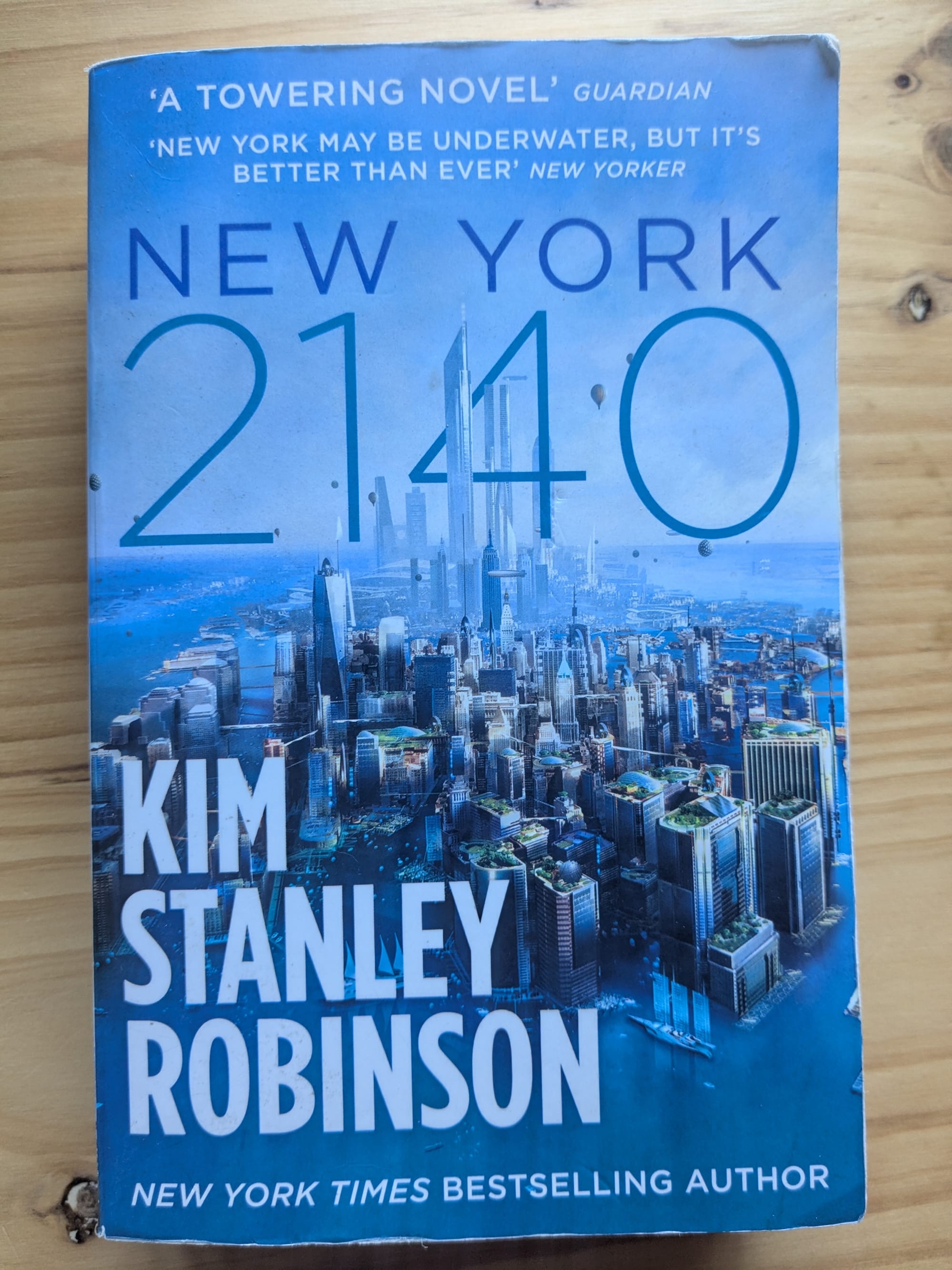
New York 2140, by Kim Stanley Robinson
626 pages, First Published: March 14, 2017
By 2140 the effects of climate change have been devastating. In particular, sea levels have risen some 55 feet above the current level, causing the flooding of all cities on the coastline. The lower half of Manhattan has become a modern Venice, with canals replacing streets and avenues and buildings rising from the water. Buildings built on sand regularly collapse, while those standing on bedrock require constant maintenance to keep them watertight. Most skyscrapers in the intertidal zone are now cooperatives owned by their occupants.
It's in that imaginary, but not so unlikely, post-climate-disaster New York that the story in this book takes place. A story centred around the folks living in the Met Life building, facing an insidious attack from some finance sharks.
In pure Robinson's style, it's a choral novel, with many protagonists whose lives intersect and collide to form a compelling and often surprising plot. His common themes are all present: ecology, politics, and sociology.
Though this book is connected with 2312, which I read a few months ago, I found it significantly better. It paints a picture that it's a lot more behind the corner from the current reality, thus more relatable. Don't forget that I was reading it in the middle of the massive heatwave hitting Europe. But it's not just that. Also from a storytelling and narration perspective, I found 2140 a lot more structured, curated and complete than its sibling happening some 200 years later.
2026, the year when most people seem to finally wake up to the reality of climate change, might be the best moment to pick up and read 2140. Highly recommended, if anything, as it might help some of us take action and prevent the reality described in it from becoming true in our future.
That's it for this week.
I hope you all enjoyed your break as much as I did, and I'm looking forward to resuming the weekly cadence.
There is a couple of interesting news cooking which I hope I'll be able to share with you all soon.
Until then, happy reading!

Comments ()