
📚 Books I Read in September 2026
Last month I got into systems thinking (again) and discovered the first chapters of two very different but equally interesting sci-fi trilogies.
In recent weeks I've been way too busy to find time to write as much as I would like to. But at least I didn't have to sacrifice my other favourite activity: reading.
While I figure out a way to get back to the regular weekly schedule, I hope you'll enjoy the September edition of the books I read last month!
I can anticipate that all three books from this past month are unquestionable recommendations.
As a reminder, all links in this issue will point to the books' pages on HardCover via a referral link.
Sudo Make Me a CTO is a reader-supported newsletter. If you enjoy the content and would like to see more of it in the future, please consider upgrading to a paid tier. Thanks in advance!
💫 Book Highlight: Learning Systems Thinking by Diana Montalion
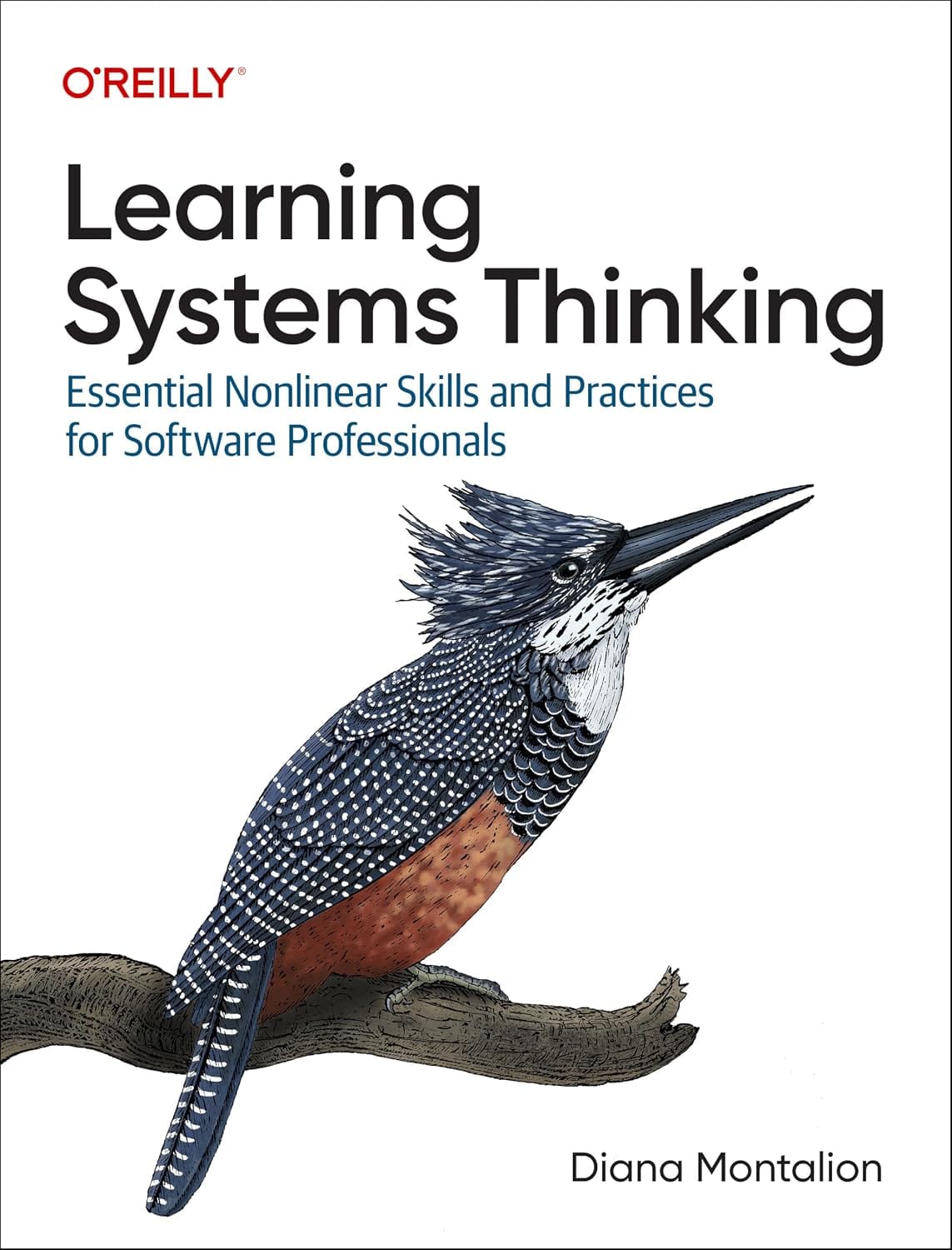
Learning Systems Thinking, by Diana Montalion
279 pages, First Published: August 20, 2024
There is something I must admit: while I believe I do grasp the core ideas from systems thinking at a conceptual level, I still struggle to apply them in practice. That's why every now and then I plunge back into the topic, hoping to come up with the secret recipe for making it work in practice.
The more I read about it, though, the more I realise such a recipe doesn't exist. Systems thinking requires a less deterministic and often counterintuitive approach. There isn't a set of fixed steps to follow to magically reach the enlightenment.
The hardest part, especially for people operating at an executive or director role, is to realise our linear thinking approach is deemed to fail... or at least to cause a whole lot of undesired results. We've all been trained to think in terms of root causes, following the principles of Newtonian physics: action and reaction. That's easy to understand. It gives the reconforting illusion that by pulling a single lever you can fix a broken organisation, platform or system.
In Learning Systems Thinking, Diana Montalion does a great job at reminding us how that linear approach can be counterproductive. The book requires a certain familiarity with the core concepts, though, as it doesn't cover in detail the notions of stock and flow, the different types of feedback loops and systems.
You will find all of that in the fantastic Systems Thinking: A Primer by Donella Meadows. I read it a couple of years ago, and you can find a short write-up below.
 Sergio Visinoni
One of my favourite aspects of systems thinking is the idea of conceptual integrity, which lies at its core. Montalion covers it in Chapter 2 of the book, which she opens with a great quote from Frederik P. Books.1
Conceptual integrity is the most important consideration in system design.
The absence of conceptual integrity is often experienced when someone is trying to optimise parts of a system, ignoring the interdependencies it has with other components, and the potential side effects the optimisation might introduce.
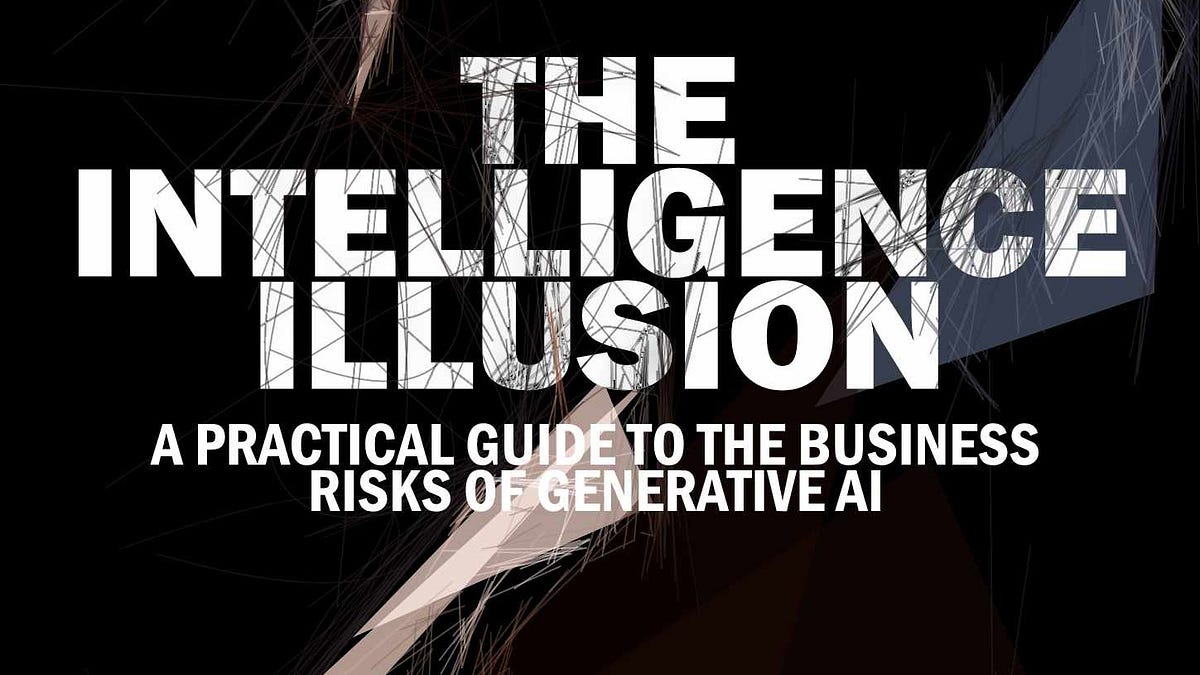
I even tried to leverage this notion in a recent article I wrote in response to a couple of pieces published by Charity Majors on the topic of AI.
 Sergio Visinoni

It's a bit unfortunate that I didn't read Diana Montalion's book before writing it, as she captures the fundamental problem I was trying to raise in a much more concise, sharp and compelling way:
When our concepts can't work together in harmony to serve a purpose, our sofware systems will reflect that lack of integrity. Integrity is the measure of how well a system operates as a whole. Linear thinking has skewed this measurement toward prirotizing efficiency and profit generation. Efficiency is important, but it causes systemic problems when it's dissociated from the impact. For example, an efficient and profitable system that generates poverty for workers and pollution for the environment includese those aspects of the system. Conceptual integrity is understanding the whole sytstem, not just the parts we optimise.
I couldn't agree more.
And I'll get back to this topic in an article I've been writing in my head for a couple of weeks now but haven't found the time and energy to sit down and put on "paper".
Back to the book.
I couldn't help but feel like I still didn't know how to really get started with the practice once I got to the end of it. The book has plenty of practical recommendations (which I should try out), and I believe that the reason for my feeling has more to do with the overall topic than to the author's work. Systems thinking can feel overwhelming and excessively abstract. To some extent it is. It's more of a way of thinking and responding than a set of principles or doctrine. It challenges many of our assumptions and helps us embrace "it depends" as an answer, rather than reaching for simplistic explanations.
Dian Montalion does a great job in making those hard-to-grasp concepts more accessible, but the hard part of the work remains with the reader.
My recommendation is to first read Donella Meadows' book and then pick up Learning Systems Thinking, as it will help you translate those concepts to the reality of the software engineering discipline.
📚 Other Books I Read in September
Les guierriers du silence by Pierre Bordage

Les guerriers du silence, by Pierre Bordage
636 pages, First Published: April 1, 1993
I discovered Pierre Bordage a couple of summers ago, when I read the Metro 2033 trilogy and a few other cool books you might want to check out. Funnily enough, the full list includes the Systems Thinking primer by Donella Meadows. There seems to be a strange connection between Summer 2024 and September 2026.
Sergio VisinoniThis is the first book of a trilogy that I'll surely read in its entirety. It's not my favourite type of sci-fi, but it was genuinely a good book. To give you an idea of the type of book we're talking about: it takes place in a very distant future, with humanity spread across a multitude of planets, organised in a sort of confederation. It mixes elements from sci-fi with a lot of fantasy stuff. Again, not my favourite genre, as I prefer the dystopian future that's just around the corner version. Still, this is genuinely a good book. Bordage does a good job in creating different worlds and developing complex characters. All underpinned by a humanist perspective.
Unlike what's happening in the real world, in Les guerriers du silence, the bad guys aren't billionaires with their machines but a species from a remote planet – the Scaythes d'Hiponeros – that have very few human traits left and are equally driven by greed and power. I have a feeling that by the end of the trilogy things won't look too good for them, but for now (spoiler alert), they've managed to gain a significant amount of power across the known cosmos.
If you're like me, you'll just need to scratch a bit below the surface of superpowers and magic, and you'll find an interesting novel where secular power, religious authorities and ill-intentioned actors all conspire to grab hold of control over the population, in a climate of oppression and terror. It will remind you of the Nazis, the Roman Inquisition, 21st-century fundamentalist regimes, and Donald Trump.
Sleeping Giants by Sylvain Neuvel

Sleeping Giants, by Sylvain Neuville
320 pages, First Published: April 26, 2016
I preordered this book as soon as it was announced and was lucky enough to receive a signed copy. That was a nice surprise.
After being back from summer travelling, with the rest of the family we decided it was about time to build up a new habit: regularly visiting the local public library. We do buy a lot of books, but sometimes we can just lend one from the library.
Besides having plenty of Spanish and Catalan books, the local one has a decent selection of books in Italian, French and English. As I was browsing through the English sci-fi selection, I noticed three books that seemed to belong to a series, from an author I had never heard of before: Sylvain Neuvel.
Upon opening one to its first page, I found this brilliant author bio.
Sylvain Neuvel was born in Quebec and dropped out of school when he was fifteen. Since then he has sold ice cream in California, peddled furniture across Canada and taught linguistics in India. He has also worked a software engineer, journalist, certified translator and received a Ph.D in Linguistics from the University of Chicago. He is an amataure robotics enthusiast and lifelong fan of all things science fiction. Sleeping Giants is his debut novel and the first in "The Themis Files". The second, Waking Gods, is out now.
That's how I decided I wanted to read it.
Sleeping Giants has all the ingredients of a great sci-fi book: technology, secret services, mad scientists and political struggles. But above all else, it's written in a style that I found brilliantly original and refreshing. Most chapters are transcripts of exchanges, or interrogations, between a mysterious unnamed character and the key actors that participate in the events narrated. It might take a few chapters to get used to it, and some people might never like it. I did. I do appreciate authors with unique styles. They're not only telling a compelling story, but they do it in a way that you would hardly find anywhere else.

I'm set on reading the whole trilogy, including some additional missing files that the author has published on its official website. Another great idea outside of the traditional book publishing standards.
By the time you read this, I'll have taken home the other two volumes in the trilogy and likely got a head start on Waking Gods.
For those of you who might not know him, he's the author of the seminal book The Mythical Man Month: Essays on Software Engineering. A book that most of the industry seems to have forgotten about in recent year's euphoria.↩

Comments ()